
When it comes to safeguarding your home, business, or commercial property, choosing the right security camera system can feel like deciphering a secret language. Acronyms like DVR, NVR, and now XVR are thrown around by vendors, leaving property owners overwhelmed and scratching their heads. You know you need protection, but which technology actually delivers the performance, future-proofing, and value your investment deserves?
If you are currently running older analog security cameras or planning a brand-new installation, you have likely crossed paths with the XVR. Promoted as the ultimate bridge between legacy systems and modern high-definition surveillance, XVR technology has completely transformed the physical security landscape. But how does it stack up against the traditional, tried-and-true DVR?
In this comprehensive, deep-dive guide, we are going to decode the acronyms, break down the core differences, and empower you to choose the absolute best security setup for your specific needs. Let’s dive in and upgrade your situational awareness!
📌 Table of Contents
- Understanding the Basics: What Do These Acronyms Actually Mean?
- What is a DVR?
- What is an XVR?
- DVR vs. XVR: Head-to-Head Comparison
- 1. Camera Compatibility and Flexibility
- 2. Cabling and Installation Complexity
- 3. Resolution and Video Quality Capabilities
- Feature Comparison Table
- Why XVR is Rapidly Becoming the Industry Standard
- 1. Zero Waste Migration
- 2. Intelligent Video Analytics Integration
- 3. Seamless Mobile and Remote Accessibility
- How to Choose the Best Setup for Your Property
- Choose a DVR If:
- Choose an XVR If:
- Secure Your World Today with the Right Technology
- Frequently Asked Questions
- Can I use regular analog cameras with an XVR system?
- Do I need to replace my existing coaxial cables if I upgrade to an XVR?
- Can an XVR record IP cameras and analog cameras at the same time?
Understanding the Basics: What Do These Acronyms Actually Mean?
📌 İlginizi Çekebilir: Veilux Devices Firmware Software
Before we pit these two technologies against one another in a feature-by-feature showdown, let’s establish a clear baseline by defining what these acronyms stand for and how they process video feeds.
What is a DVR?
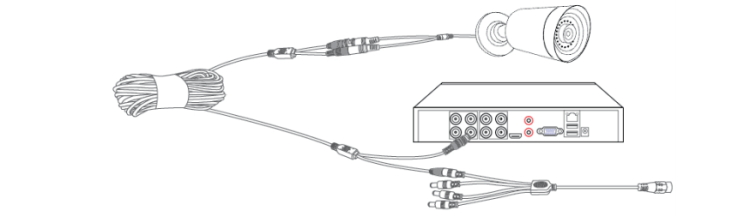
DVR stands for Digital Video Recorder. In a traditional DVR security setup, the cameras themselves are analog. They capture video and transmit raw analog signals via coaxial cables (like RG59 or RG6) directly to the DVR unit. Once the video data arrives at the recorder, the DVR’s internal processor (codec chip) digitizes and compresses the footage, then saves it to a hard drive.
Historically, DVR systems were limited by standard definition (SD) resolutions like 480p or 960H. However, modern HD-DVRs have evolved to support high-definition analog formats such as HD-TVI, HD-CVI, and AHD, delivering crisp 1080p or even 4K resolutions over the exact same legacy coaxial infrastructure.
What is an XVR?
XVR stands for X-Video Recorder (often referred to as a “penta-brid” or universal recorder). Think of the XVR as the ultimate evolutionary leap in analog-compatible security technology. Developed to solve the modernization dilemma, an XVR is engineered to accept multiple video input formats simultaneously.
An XVR can seamlessly ingest feeds from traditional analog cameras, modern HD coaxial cameras (TVI, CVI, AHD), and digital IP (Internet Protocol) cameras. This incredible versatility means you can rip out a broken camera and replace it with almost any technology on the market without having to replace your central recording hardware.
DVR vs. XVR: Head-to-Head Comparison
📌 İlginizi Çekebilir: FLEETA BlackVue Dash Cameras Full Setup Guide
To truly understand which system reigns supreme, we must evaluate them across critical performance metrics: camera compatibility, resolution limits, cabling infrastructure, expandability, and overall cost-efficiency.
1. Camera Compatibility and Flexibility
This is where the battle lines are drawn. A standard DVR is strictly bound to analog-based technologies. While modern HD-DVRs can handle various HD-over-coax formats, they generally slam the door shut on native IP cameras. If you want to add a high-end network camera to a pure DVR setup, you are completely out of luck.
On the flip side, an XVR is the undisputed champion of compatibility. Because it features penta-brid technology, it can process signals from:
- Standard analog cameras (960H and lower)
- High-Definition Analog (HD-TVI, HD-CVI, AHD up to 4K)
- IP (Network) cameras via your local network switch
This unmatched flexibility allows you to manage your surveillance ecosystem flexibly. Whether you are monitoring live feeds on-site or utilizing tools like Installing DW Spectrum for Windows to streamline your central viewing station, having an adaptable recorder makes all the difference.
2. Cabling and Installation Complexity
Both DVR and XVR systems shine when it comes to leveraging pre-existing infrastructure. If your property was wired years ago with coaxial cables running through walls, ceilings, and crawl spaces, ripping them out to install CAT6 Ethernet cables for an NVR system would be an expensive, labor-intensive nightmare.
Both DVRs and XVRs utilize BNC coaxial connections for analog cameras, meaning you can drop either unit straight into an existing legacy setup without running a single new foot of wire. However, because XVRs also support IP cameras over network lines (PoE), they give you a hybrid deployment option that traditional DVRs simply cannot match.
3. Resolution and Video Quality Capabilities
Old-school DVRs were plagued by grainy, pixelated footage that made identifying faces or license plates nearly impossible. Modern iterations have stepped up their game, supporting 1080p, 4MP, 5MP, and even 4K ultra-HD over coax.
XVRs inherit these high-resolution capabilities for analog inputs while extending maximum potential performance. Because XVRs can mix and match channels, you can assign ultra-high-resolution IP camera streams to critical entry points while relying on cost-effective HD-coax cameras for perimeter coverage.
Feature Comparison Table
Use the detailed comparison matrix below to quickly evaluate how DVR and XVR systems stack up across key technical and practical benchmarks:
| Feature / Specification | Traditional / HD-DVR | XVR (Penta-Brid Recorder) |
|---|---|---|
| Supported Camera Types | Analog, HD-TVI, HD-CVI, AHD | Analog, HD-TVI, HD-CVI, AHD, and IP Cameras |
| Cabling Infrastructure | Coaxial Cable (BNC) | Coaxial Cable (BNC) + Ethernet (RJ45 for IP channels) |
| Max Resolution Support | Up to 4K (depending on model and codec) | Up to 4K+ (Scalable based on IP and coax inputs) |
| Future-Proofing | Low to Moderate (Limited to analog/coax evolutions) | High (Hybrid capability allows gradual IP migration) |
| Cost-Efficiency | Very high for replacing older analog-only systems | Exceptional long-term value due to upgrade flexibility |
| Remote Viewing Integration | Standard mobile apps and client software | Advanced multi-platform apps and remote monitoring tools |
Why XVR is Rapidly Becoming the Industry Standard
As security demands escalate, property owners and system integrators are moving away from restrictive single-technology hardware. The XVR has quickly become the preferred choice for retrofits and new installations alike for several compelling reasons.
1. Zero Waste Migration
If you manage a commercial facility or a sprawling residential property with dozens of operational analog cameras, throwing them away because you want to upgrade your brain (the recorder) is a massive waste of capital. An XVR allows you to keep 100% of your existing cabling and functioning analog cameras active today, while giving you the freedom to upgrade cameras to high-definition models one by one as budget permits.
2. Intelligent Video Analytics Integration
Modern security isn’t just about recording what happened; it’s about preventing incidents before they occur. Advanced XVRs come equipped with powerful AI-driven edge analytics, such as:
- Perimeter intrusion detection
- Tripwire alarms
- Object left behind / missing object detection
- Advanced facial recognition and human/vehicle filtering
These smart features drastically reduce false alarms triggered by pets, swaying branches, or passing headlights, ensuring your security team only reacts to genuine threats.
3. Seamless Mobile and Remote Accessibility
Security is only as good as your ability to check it from anywhere in the world. Modern XVRs feature robust cloud-connectivity features that make setting up P2P remote viewing effortless. Whether you are checking feeds on your desktop or utilizing the Top 10 Security Camera Apps for Android and iOS Devices to monitor your property on the go, an XVR ensures crystal-clear, low-latency video streams right in the palm of your hand.
How to Choose the Best Setup for Your Property
Choosing between a DVR and an XVR ultimately boils down to three core questions: What is your current infrastructure? What is your budget? And what are your future expansion plans?
Choose a DVR If:
- You are on an extremely tight, strict budget and only need basic, reliable recording for existing analog cameras.
- You have zero intention of ever expanding into IP cameras or network-based surveillance components.
- You are managing a simple, small-scale setup (like a small retail boutique or residential cottage) where advanced analytics and hybrid flexibility are unnecessary.
Choose an XVR If:
- You want the ultimate peace of mind knowing your system can adapt to future technology shifts without requiring a total system overhaul.
- You currently use analog/coaxial cameras but want the option to introduce high-performance IP network cameras into blind spots or high-priority zones.
- You want access to modern AI-powered motion analytics, high-definition 4K video clarity, and seamless mobile app integration without throwing away your existing wiring.
Secure Your World Today with the Right Technology
Navigating the world of security hardware doesn’t have to be intimidating. While traditional DVRs still hold a niche for ultra-low-budget, purely analog replacements, the XVR stands head and shoulders above as the superior, future-proof powerhouse. By bridging the gap between legacy coaxial setups and cutting-edge IP capabilities, an XVR delivers unmatched versatility, elite performance, and incredible return on investment.
Don’t leave your property’s safety to outdated technology or guesswork. Upgrade your surveillance infrastructure today with a high-performance XVR system, harness intelligent video analytics, and take absolute control of your security perimeter. Contact our security experts today to find the customized XVR package built specifically for your property!
Frequently Asked Questions
Can I use regular analog cameras with an XVR system?
Yes, absolutely! XVR recorders are designed to be backward compatible. They fully support legacy standard-definition analog cameras (960H and lower), modern HD coaxial formats (HD-TVI, HD-CVI, AHD), and modern digital IP cameras all on the exact same unit.
Do I need to replace my existing coaxial cables if I upgrade to an XVR?
No, you do not. One of the greatest advantages of an XVR system is that it utilizes your existing BNC coaxial cabling infrastructure. This saves you thousands of dollars in labor costs and eliminates the need to tear open walls to run new wires.
Can an XVR record IP cameras and analog cameras at the same time?
Yes. XVRs feature “hybrid” or “penta-brid” architecture, meaning they can simultaneously process, display, and record feeds from both coaxial-based analog cameras and network-based IP cameras across their available channels.