Best XVR Devices 2026: Future-Proofing Your Security with Top Hybrid Recorders, The world of security surveillance is in constant flux, with new technologies emerging at a rapid pace.
Best XVR Devices 2026: Future-Proofing Your Security with Top Hybrid Recorders
Introduction: The Evolving Landscape of Surveillance and the XVR’s Crucial Role
The world of security surveillance is in constant flux, with new technologies emerging at a rapid pace. While IP cameras offer superior resolution, advanced features, and network flexibility, the vast installed base of traditional analog systems still represents a significant investment for countless businesses and homeowners worldwide. Ripping out perfectly functional coaxial cabling and analog cameras to upgrade to a full IP system can be prohibitively expensive and disruptive.
This is precisely where the eXtended Video Recorder (XVR) becomes indispensable – a powerful bridge allowing seamless integration of traditional analog cameras (AHD, TVI, CVI, CVBS) and modern IP cameras. As we approach 2026, the capabilities of XVR devices have evolved dramatically. They are no longer just simple recorders but sophisticated security hubs, incorporating cutting-edge AI for proactive threat detection, enhanced cybersecurity protocols, and greater scalability to meet growing demands. This deep-dive article will serve as your authoritative guide to navigating the best XVR devices available today and in the near future, ensuring you make an informed decision to future-proof your security infrastructure and maximize your return on investment.
1. Understanding XVR Technology: Bridging Analog and IP in 2026
What is an XVR and Why Does it Matter Now More Than Ever?
- Definition and Core Functionality (Multi-format compatibility): An XVR is a type of digital video recorder (DVR) that stands for “eXtended Video Recorder.” Its defining characteristic is its universal compatibility, meaning it can simultaneously record video streams from multiple camera formats: traditional analog (CVBS), high-definition analog (AHD, HD-TVI, HD-CVI), and IP network cameras. Unlike a traditional DVR (which only handles analog) or an NVR (Network Video Recorder, which only handles IP), an XVR offers unparalleled versatility.
- The “Hybrid Advantage”: Cost-effectiveness, flexibility, and gradual migration: The primary advantage of an XVR lies in its hybrid nature. It allows users to leverage their existing analog camera infrastructure, preserving initial investments, while gradually upgrading to higher-resolution IP cameras as needed. This phased migration strategy is significantly more cost-effective and less disruptive than a complete system overhaul. It offers the flexibility to mix and match camera types based on specific surveillance needs and budget constraints, making it an ideal solution for a vast range of applications.
- Market Relevance in 2026: Sustained demand for mixed environments: As we look towards 2026, the demand for XVRs remains robust. Many organizations and individuals still operate with a blend of older analog and newer IP cameras. Moreover, new installations often find XVRs beneficial for specific scenarios where analog’s simplicity and cost-effectiveness (e.g., shorter cable runs, specific camera types) complement IP’s advanced features. The continuous innovation in XVR capabilities ensures its enduring relevance in a diverse surveillance landscape.
Key Technological Shifts in XVR Devices by 2026
The XVR landscape is not static; it’s rapidly evolving to meet the demands of modern security.
- Enhanced Processing Power for AI and Analytics: The biggest shift is the integration of powerful chipsets capable of on-device AI processing. This means XVRs can now perform complex video analytics, object detection, and even facial recognition without relying solely on cloud computing or separate servers. This edge AI capability reduces latency, improves efficiency, and enhances privacy.
- Support for Higher Resolutions (Beyond 4K): While 4K (8MP) is becoming standard for IP cameras, 2026 XVRs are increasingly supporting higher resolutions, even up to 8K (33MP) for both IP and increasingly, advanced HD-over-Coax cameras. This ensures future compatibility with next-generation sensors and provides unparalleled detail for forensic analysis.
- Advanced Compression Standards (H.265+, H.266): Efficient video compression is crucial for managing bandwidth and storage. H.265+ (HEVC) is already a standard, but the industry is moving towards H.266 (Versatile Video Coding – VVC) or similar ultra-efficient codecs. These advanced standards can reduce file sizes by up to 50% compared to H.265, drastically cutting storage costs and network load without compromising video quality.
- Increased Focus on Cybersecurity and Data Integrity: With growing cyber threats, XVRs are incorporating more robust security features. This includes secure boot processes, end-to-end encryption for video streams and recorded data, multi-factor authentication (MFA), and regular, secure firmware update mechanisms. Data integrity checks and tamper detection are also becoming standard to ensure the authenticity of surveillance footage.
2. Essential Features for 2026 XVR Devices: A Buyer’s Checklist
Choosing the right XVR in 2026 requires a discerning eye. Here’s a comprehensive checklist of features you should prioritize:

Universal Compatibility and Resolution Support
- Comprehensive Multi-format Support (AHD, TVI, CVI, CVBS, IP): Ensure the XVR explicitly states support for all major analog HD formats (AHD, TVI, CVI) in addition to traditional CVBS (D1/960H) and, crucially, a flexible number of IP camera channels. This guarantees maximum compatibility with your existing and future cameras.
- High-Resolution Recording Capabilities (4K, 8K, and future-ready): Look for an XVR that can record at least 4K resolution on all its analog HD channels and support even higher resolutions (e.g., 8K) for its IP channels. This ensures crisp, detailed footage and readiness for future camera upgrades.
- Frame Rate Considerations for Smooth Playback and Detail: High resolution is important, but adequate frame rates are essential for smooth video and capturing fast-moving events. Aim for devices that offer 25/30 frames per second (fps) at higher resolutions, especially for critical areas.
Advanced AI and Video Analytics Integration
This is where 2026 XVRs truly shine, moving beyond passive recording to proactive intelligence.
- Real-time Object Detection and Classification (Human, Vehicle, Animal): The ability to differentiate between humans, vehicles, and animals significantly reduces false alarms triggered by environmental factors, focusing alerts on genuine threats.
- Perimeter Protection and Intelligent Intrusion Detection: Advanced analytics can define virtual perimeters, tripwires, and intrusion zones, alerting security personnel the moment an unauthorized entry occurs.
- Facial Recognition and LPR (License Plate Recognition) Capabilities: For specific applications, integrated facial recognition can identify authorized personnel or flag persons of interest, while LPR can track vehicle movements and manage access control.
- Behavioral Analytics (Loitering, Crowd Detection): These features can detect unusual patterns, such as individuals loitering in restricted areas or abnormal crowd gatherings, providing early warnings for potential incidents.
- AI-powered Search and Event Playback: Imagine searching hours of footage for “all red cars that passed this point between 2 PM and 3 PM.” AI makes this level of granular, intelligent search a reality, drastically cutting down investigation time.
Robust Storage and Data Management Solutions
- HDD Capacity and Expandability (Number of Bays, Max TB per HDD): Consider the number of hard drive bays (1, 2, 4, or more) and the maximum capacity supported per HDD (e.g., 16TB, 20TB). This directly impacts how much footage you can store before overwriting.
- RAID Configuration for Data Redundancy and Reliability: For critical applications, RAID (Redundant Array of Independent Disks) provides data redundancy, meaning if one hard drive fails, your recorded data is still safe on another. Look for RAID0, RAID1, RAID5 support depending on your needs.
- Cloud Backup and Hybrid Storage Options (Local + Cloud): The best XVRs offer seamless integration with cloud storage services (e.g., Dropbox, Google Drive, dedicated surveillance cloud platforms) for off-site backup of critical events or continuous recording, providing an extra layer of data security.
- Intelligent Storage Management (e.g., event-triggered recording): Features like intelligent recording only when motion is detected or an event is triggered, combined with pre-record and post-record buffers, optimize storage usage and ensure crucial moments are captured.
Network Performance and Remote Access
- High Bandwidth Throughput for IP Camera Integration: Ensure the XVR has sufficient network throughput (e.g., Gigabit Ethernet ports) to handle the combined bandwidth of multiple high-resolution IP cameras without bottlenecks.
- Encoding Efficiency (H.265+, H.266) for Bandwidth and Storage Savings: As mentioned, advanced compression significantly reduces the data footprint, which is vital for both storage and network performance, especially for remote access.
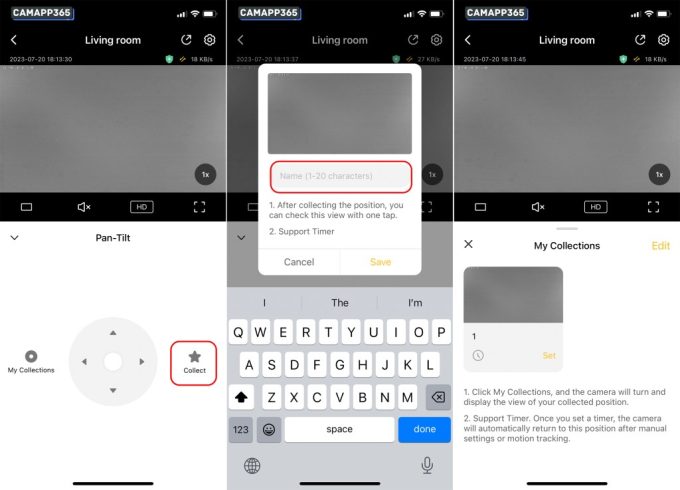
- P2P Cloud Services and Intuitive Mobile App Integration: Easy plug-and-play (P2P) cloud services simplify remote access setup, eliminating complex port forwarding. A well-designed, feature-rich mobile app is crucial for on-the-go monitoring, playback, and alert management.
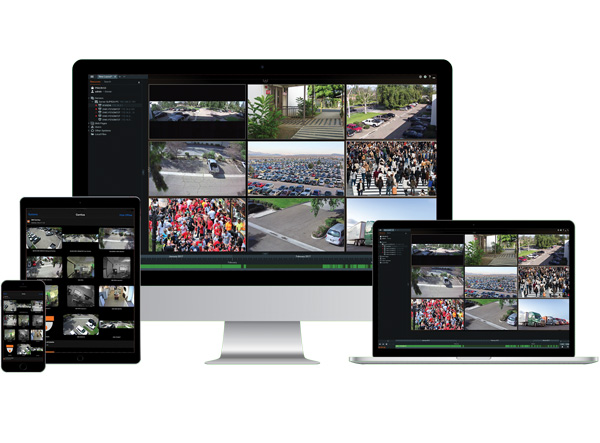
- Multi-site Management and Centralized Monitoring Platforms: For businesses with multiple locations, the ability to manage and monitor all XVRs from a single centralized platform (VMS – Video Management Software) is a critical feature.
Cybersecurity and Data Privacy Protocols
In 2026, cybersecurity is non-negotiable for any connected device.
- End-to-End Encryption for Video Streams and Data: All video data, both in transit and at rest, should be encrypted to prevent unauthorized access and tampering. Look for AES 256-bit encryption.
- Secure Boot and Firmware Update Mechanisms: Secure boot ensures the device starts with trusted software, while encrypted and authenticated firmware updates prevent malicious injections.
- User Authentication and Granular Access Control: Robust user management with strong password policies, multi-factor authentication (MFA), and the ability to assign different levels of access (e.g., view-only, playback, configuration) is essential.
- Compliance with Data Protection Regulations (e.g., GDPR, CCPA): For businesses, ensuring the XVR and its associated software comply with relevant data privacy laws is crucial to avoid legal penalties. Features like data masking or privacy zones can help.
Scalability and Ease of Use
- Channel Expandability (Analog, IP): Consider if the XVR offers flexible channel allocation, allowing you to convert analog channels to IP channels as your system evolves, or if it supports additional IP channels beyond its primary analog count.
- Intuitive User Interface and Configuration Wizards: A user-friendly interface, both on the device and via web/mobile apps, makes setup, monitoring, and playback straightforward, reducing operational complexity.
- Integration with Third-Party Systems (e.g., Access Control, Alarm Systems): For comprehensive security, look for XVRs that can integrate with other security systems like alarm panels, access control, or even smart home platforms, creating a unified ecosystem.
3. Top XVR Devices of 2026: Category-Specific Recommendations
The market for XVR devices is diverse, with manufacturers like Hikvision, Dahua, Uniview, and others continually innovating. While specific model numbers evolve rapidly, we can identify categories and key characteristics to look for in 2026.
Best for Small to Medium Businesses (SMBs): Balancing Cost and Features
SMBs need reliable, scalable, and manageable security solutions that don’t break the bank. Look for XVRs that offer a good balance of essential features without the overkill of enterprise-grade systems.
- Key Characteristics: Typically 8-16 channel devices (with additional IP channels), supporting 4K resolution on all analog HD channels, H.265+ compression, basic AI analytics (human/vehicle detection), P2P cloud access, and 1-2 HDD bays. User-friendly interfaces are paramount.
- Practical Example: A retail chain upgrading security across multiple stores. They can leverage an SMB-focused XVR to integrate existing analog checkout cameras (e.g., 1080p CVI) with new 4K IP cameras for store entrances, high-value inventory areas, and external perimeter monitoring. The XVR’s AI can differentiate customers from staff and flag suspicious loitering, while cloud connectivity allows centralized management across all branches from a single platform. This phased approach minimizes disruption and maximizes budget efficiency.
Premium XVRs for Enterprise and Complex Deployments: Uncompromised Performance
For large organizations, critical infrastructure, and complex sites, performance, redundancy, and advanced capabilities are non-negotiable.
- Key Characteristics: 32-64+ channel devices (with significant IP camera capacity), 8K resolution support, multiple HDD bays with RAID configurations (RAID1, RAID5, RAID10), advanced AI suites (facial recognition, LPR, complex behavioral analytics), robust network throughput, integration with VMS, and enterprise-grade cybersecurity features.
- Case Study: A manufacturing plant utilizing a high-end XVR system for comprehensive perimeter security, integrating a diverse array of cameras. This includes existing analog cameras monitoring assembly lines, new 4K IP cameras for general surveillance, thermal cameras for furnace monitoring, and LPR cameras at entry/exit points. The XVR’s advanced AI monitors safety compliance (e.g., hard hat detection in specific zones), detects unauthorized vehicles, and flags unusual activity around sensitive equipment. RAID ensures data integrity, and integration with the plant’s access control system provides a unified security dashboard.
Best Value XVRs: Maximizing Security on a Budget
For homeowners or small businesses with tight budgets, value XVRs offer essential security features and reliable performance without compromising too much on quality.
- Key Characteristics: Typically 4-8 channel devices, supporting up to 4K on a limited number of analog channels or 1080p/4MP across all, H.265 compression, basic motion detection, one HDD bay, and simple mobile app integration. Focus is on core recording and remote viewing.
- Practical Example: A homeowner integrating existing analog doorbell cameras (CVBS) with new Wi-Fi enabled IP cameras for backyard surveillance and a 4K HD-TVI camera at the front door. An affordable, feature-rich XVR allows them to manage all these disparate cameras from a single interface, view live feeds on their smartphone, and receive motion alerts. This provides comprehensive home security without the need for multiple, incompatible recording solutions.
XVRs with Leading AI Integration: The Smart Surveillance Edge
These XVRs are at the forefront of intelligent surveillance, making AI and deep learning central to their functionality.
- Key Characteristics: Dedicated AI co-processors, advanced deep learning algorithms for superior accuracy in object classification, facial recognition, LPR, and custom behavioral analytics. Often feature edge AI capabilities to reduce server load and improve real-time responses.
- Case Study: A smart city initiative deploying XVRs with advanced facial and object recognition capabilities for public safety and traffic management. These XVRs are placed at key intersections and public spaces, integrating existing traffic cameras with new high-resolution IP sensors. The AI-powered XVRs analyze traffic flow, detect congestion, identify suspicious packages, and assist in locating missing persons through facial recognition alerts. This allows for efficient data analysis, proactive incident response, and improved urban management.
4. Optimizing Your XVR System: Installation, Integration, and Cybersecurity
Even the best XVR device will underperform without proper planning, installation, and ongoing maintenance. Here’s how to optimize your system.
Planning Your Surveillance System: A Strategic Approach
- Site Assessment and Camera Placement Strategy: Conduct a thorough walkthrough of your property. Identify critical areas (entrances, exits, valuables, blind spots), potential threats, and lighting conditions. Plan camera types (dome, bullet, PTZ, thermal) and their optimal placement for maximum coverage and detail.
- Channel Requirements (Analog vs. IP): Determine the exact number of analog cameras you plan to keep and the number of IP cameras you intend to add or upgrade to. Ensure your chosen XVR has sufficient channels and flexibility to accommodate this mix, plus room for future expansion.
- Bandwidth and Storage Calculations: Estimate the required bandwidth for your IP cameras (resolution, frame rate, compression) to ensure your network can handle the load. Calculate storage needs based on the number of cameras, recording resolution, frame rate, compression, and desired retention period. This prevents footage loss and ensures smooth operation.
Installation and Cabling Best Practices
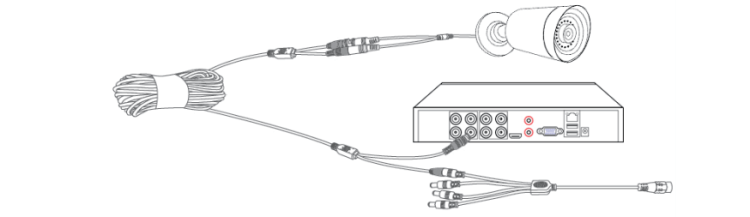
- Coaxial Cable Considerations for Analog Cameras: For existing analog cameras, ensure coaxial cables (RG59 or RG6) are in good condition. For new analog installations, use high-quality copper coaxial cables for optimal signal transmission, especially for HD-over-Coax cameras.
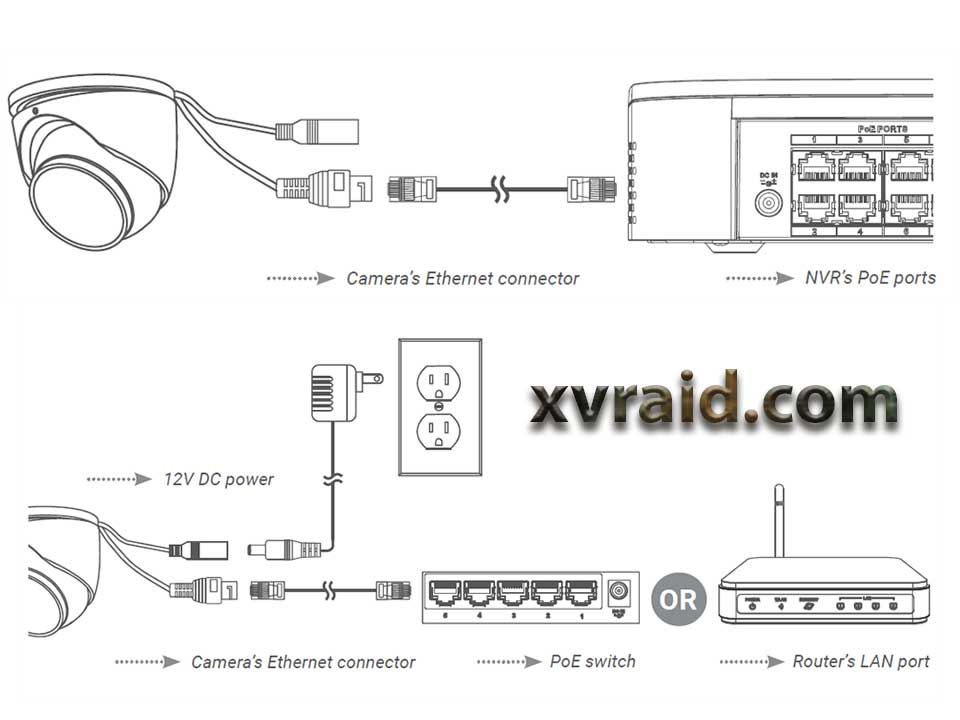
- Ethernet Cabling for IP Cameras (PoE): Use Cat5e or Cat6 Ethernet cables for IP cameras. Power over Ethernet (PoE) is highly recommended for IP cameras, as it simplifies installation by delivering both data and power over a single cable, reducing wiring clutter and power outlet requirements.
- Power Supply and UPS Integration: Ensure all cameras and the XVR have a stable and sufficient power supply. Consider integrating an Uninterruptible Power Supply (UPS) for the XVR and critical cameras to maintain recording during power outages, providing continuous security.
Network Configuration and Remote Access Setup
- IP Addressing and Port Forwarding: Assign static IP addresses to your XVR for reliable network access. If using traditional remote access methods, configure port forwarding on your router for the necessary ports (HTTP, RTSP, mobile app port) while being mindful of security implications.
- DDNS and P2P Cloud Service Configuration: Dynamic DNS (DDNS) services are essential if you have a dynamic public IP address, allowing you to access your XVR via a consistent hostname. P2P (Peer-to-Peer) cloud services offered by manufacturers simplify remote access greatly, often requiring just a QR code scan.
- Router and Firewall Settings for Secure Remote Access: Configure your router’s firewall to allow only necessary traffic to and from the XVR. Disable Universal Plug and Play (UPnP) on your router if you’re manually configuring port forwarding, as UPnP can sometimes pose security risks.
Integrating with Existing Infrastructure and Third-Party Systems
- Migrating Legacy Analog Cameras: The beauty of an XVR is its ability to seamlessly integrate existing analog cameras. Simply connect them to the XVR’s BNC inputs. The XVR will auto-detect the signal type (CVBS, AHD, TVI, CVI) and resolution.
- Connecting to Alarm Panels and Access Control Systems: Many XVRs offer alarm input/output ports for integration with external sensors (PIR detectors, door contacts) or alarm sirens. Advanced XVRs can integrate with access control systems, linking video footage to specific entry/exit events.
- VMS (Video Management Software) Integration: For larger deployments, integrate your XVR with a robust VMS. This provides a unified platform for managing multiple recorders, advanced search, video walls, and custom automation rules.
Maintaining Cybersecurity and System Health
- Regular Firmware Updates and Patch Management: Always keep your XVR’s firmware updated to the latest version. Manufacturers frequently release updates to patch security vulnerabilities and add new features.
- Strong Password Policies and Multi-Factor Authentication: Enforce strong, unique passwords for all XVR user accounts. Enable Multi-Factor Authentication (MFA) whenever available for an extra layer of security against unauthorized access.
- Network Segmentation and Intrusion Detection Systems: Consider placing your surveillance network on a separate VLAN (Virtual Local Area Network) to segment it from your main corporate or home network. Deploying an Intrusion Detection System (IDS) can alert you to suspicious network activity originating from or targeting your XVR.
- Data Backup and Recovery Strategies: Beyond RAID, regularly back up critical footage to an external drive, NAS, or cloud storage. Have a clear recovery plan in case of hardware failure or data corruption.
5. Future-Proofing Your Security: Beyond 2026 with Advanced XVR Capabilities
The journey of security technology doesn’t stop at 2026. XVRs are poised to evolve further, becoming even more intelligent and integrated.
The Continued Evolution of AI and Edge Computing
- More Sophisticated On-device AI Analytics: Expect XVRs to house even more powerful AI chipsets, enabling highly complex analytics directly at the edge. This includes advanced gesture recognition, predictive analytics for anomaly detection, and real-time threat assessment with even higher accuracy.
- Integration with AI-powered Cloud Services: While edge AI will grow, the synergy with cloud AI will also deepen. XVRs will seamlessly offload complex, resource-intensive AI tasks (e.g., long-term behavioral pattern analysis, large-scale facial database matching) to the cloud, forming a powerful hybrid AI architecture.
- Distributed AI Architectures: Future systems may see AI processing distributed across cameras, XVRs, and cloud, creating a resilient and highly efficient intelligent surveillance network.
Cloud-Native XVRs and Hybrid Cloud Solutions
- Greater Reliance on Cloud for Storage, Analytics, and Management: The trend towards cloud-based solutions will continue. XVRs might become ‘thinner’ clients, relying more on robust cloud infrastructure for storage scalability, advanced analytics processing, and centralized management across geographically dispersed sites.
- Seamless On-premises and Cloud Integration: The most effective solutions will be hybrid, offering the best of both worlds: local recording and immediate edge AI for critical, low-latency needs, combined with the infinite scalability and advanced analytics power of the cloud.
IoT Convergence and Smart Building Integration
- XVRs as Central Hubs for Security and Smart Devices: XVRs are evolving beyond just video recording. They are becoming intelligent hubs that can integrate with a wider array of IoT sensors and smart building systems – from environmental sensors (temperature, humidity) to smart lighting, smart locks, and energy management systems.
- Enhanced Automation and Proactive Responses: Imagine an XVR detecting an unauthorized person in a restricted area, automatically triggering an alarm, locking nearby doors, adjusting lighting, and sending a detailed alert to security personnel, all while streaming live video. This level of proactive, automated response is the future.
Ethical Considerations and Data Governance
- The Growing Importance of Privacy-by-Design: As surveillance capabilities grow, so does the imperative for ethical considerations. Future XVRs will incorporate privacy-by-design principles, offering advanced features like automatic facial blurring, data anonymization, and granular access controls to protect individual privacy.
- Compliance with Evolving Data Protection Laws: Manufacturers will need to continually adapt to and build compliance features into their XVRs to meet evolving global data protection regulations, ensuring responsible and lawful deployment of surveillance technology.
- Responsible Use of AI in Surveillance: The industry will face increasing scrutiny regarding the responsible and unbiased use of AI. XVRs will likely incorporate mechanisms for audit trails and transparency in AI decision-making.
FAQ Section: Your Questions Answered
Q1: What is the fundamental difference between an NVR, DVR, and XVR?
A1: The key difference lies in camera compatibility. A DVR (Digital Video Recorder) only records video from traditional analog cameras (CVBS). An NVR (Network Video Recorder) exclusively records video from IP (Internet Protocol) cameras. An XVR (eXtended Video Recorder) is a hybrid device that can record from both traditional analog (CVBS), high-definition analog (AHD, TVI, CVI), and IP cameras simultaneously, offering the most flexibility.
Q2: Can I use my existing analog cameras with any new XVR device, regardless of brand?
A2: Most modern XVRs are designed for broad compatibility with various analog HD formats (AHD, TVI, CVI, and CVBS). While an XVR from one major brand (e.g., Hikvision) is generally compatible with analog HD cameras from another (e.g., Dahua), it’s always best to verify the specific formats and resolutions supported by the XVR and your existing cameras. For IP cameras, ONVIF (Open Network Video Interface Forum) compliance is a good indicator of interoperability, though direct brand matching often offers the best feature set.
Q3: How much hard drive storage do I realistically need for my XVR system in 2026?
A3: Storage needs vary significantly based on the number of cameras, their resolution, frame rate, compression codec (H.265+ is highly efficient), and desired recording duration. For a typical small business with 8 x 4K cameras recording 24/7 with H.265+ compression, you might need 8-12TB for a month’s footage. For home users with 4 x 2MP cameras, 2-4TB might suffice for a similar period. Use online storage calculators provided by camera manufacturers for a more precise estimate based on your exact setup.
Q4: What are the primary benefits of investing in an XVR with advanced AI capabilities?
A4: The primary benefits are significantly enhanced accuracy, proactive security, and reduced operational costs. AI-powered XVRs can differentiate between humans and animals, drastically reducing false alarms. They offer intelligent features like perimeter protection, facial recognition, and license plate recognition for automated alerts and access control. Furthermore, AI streamlines forensic investigations by allowing specific searches (e.g., “red car in parking lot on Tuesday”), saving countless hours compared to manual review.
Q5: Is it difficult for a non-expert to set up and configure an XVR system for remote viewing?
A5: Modern XVRs have made remote viewing setup much simpler than in the past. Many utilize P2P (Peer-to-Peer) cloud services, which often only require scanning a QR code with a mobile app to connect. While some basic network understanding can be helpful, the intuitive user interfaces and step-by-step wizards found in 2026 XVRs are designed to guide even non-experts through the process. Most manufacturers also provide comprehensive online guides and customer support.
Conclusion: Securing Your Tomorrow, Today
The XVR devices of 2026 represent a critical intersection of legacy investment and future innovation. They offer unparalleled flexibility, allowing businesses and homeowners alike to leverage existing analog infrastructure while seamlessly integrating the power of modern IP surveillance and advanced AI analytics. By understanding the essential features, making informed choices based on your specific needs, and adhering to best practices for installation and cybersecurity, you can build a robust, scalable, and future-proof security system.
Investing in the right XVR today means securing your tomorrow with intelligent, reliable, and adaptable surveillance. Don’t let outdated technology compromise your safety. Embrace the hybrid advantage and step confidently into the future of security.